
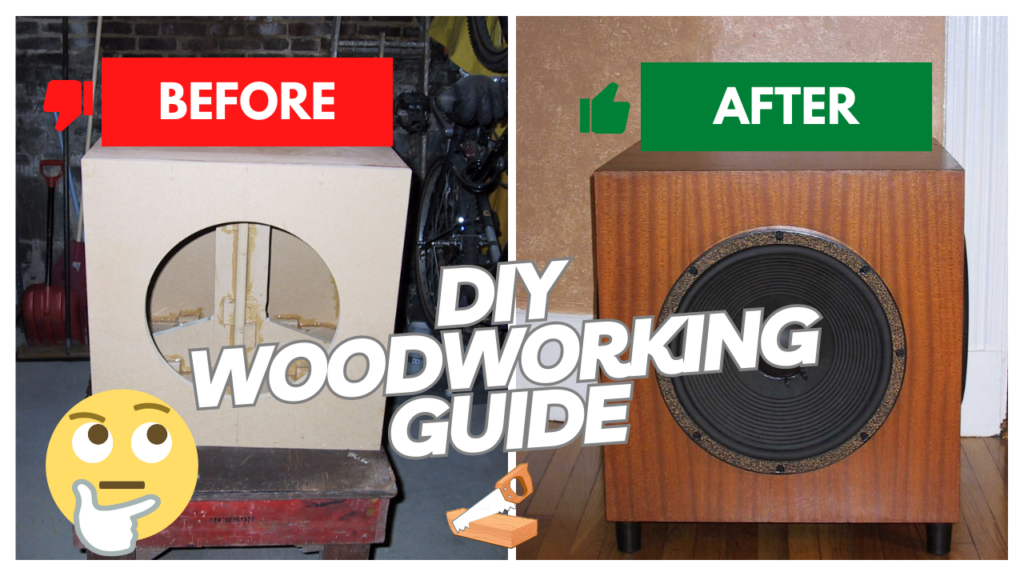
DIY Woodworking Guide
DIY woodworking can seem like a really intimidating hobby. Especially when you think about all the high-speed saws and sharp blades involved. Looking online for inspiration doesn’t help either. There are a ton of DIY enthusiasts building projects that look like they need 100 years of experience to create.
Fortunately for you, woodworking is just like any other hobby out there. If you work on it just as hard, you can start making spectacular projects in no-time. But make no mistake, it will be hard to figure it out as a beginner. Therefore, we’ve created this short guide to help you organize your thoughts around your first DIY woodworking project. Let’s gets started.
Can You Teach Yourself Woodworking?
Fortunately, woodworking is not hard to learn and yes, you can teach yourself how to do it. Unfortunately, you can’t be an expert right away. You are going to have to sacrifice time, energy, and even resources to master the art. However, if you are passionate enough, this won’t be a problem at all.
A gentle reminder though; don’t expect too much out of yourself. Expect some failures. Since this is a totally new environment for you, it’s going to take a little bit of time for you to get perfect. But, you will eventually get the swing of things. Just remember two things; patience & perseverance.
What Basic Woodworking Skills Do You Require to Start?
Working with wood is a very handy skill. Not only does it allow you to bring new ideas into life, but it also allows you to fix and make things around the house. Unfortunately, if you didn’t receive the basic training in college or from a professional, then it’s going to be a little challenging.
However, with a little dedication, you can teach yourself a few skills that can actually help you get started in no time. Some of the most basic skills that you need to start include:
• Understanding wood & how it works – Understanding wood and how it works is crucial in selecting the right wood for your projects, preventing wood movement issues, and achieving desirable results in your woodworking projects.
• Understanding tools & their specific purpose – This includes understanding different types of saws, drills, planes, chisels, and other woodworking tools, their functions, and how to use them safely and effectively to achieve precise and professional results in your woodworking projects.
• Sanding – Proper sanding not only enhances the appearance of the woodwork but also ensures a flawless finish.
• Painting – Proper surface preparation, paint application techniques, and finishing techniques are essential aspects of painting in woodworking projects.
• How to cut materials – Understanding how to measure, mark, and make precise cuts is crucial in achieving accurate and tight-fitting joinery, as well as creating the desired shapes and forms in woodworking projects.
• How to use & care for woodworking tools (Bridgewater and Bridgewater) – Proper tool usage and maintenance not only ensure safety but also help to achieve precise and consistent results in woodworking projects, while also prolonging the lifespan of the tools.

What Tools Does a Beginner Woodworker Need?
DIY woodworking is an awesome hobby that you can use to relieve stress, pass the time, or earn a second income with. But to succeed at woodworking, you are going to need the tools of the trade. Below is a list of must-have tools that you need to have as a beginner woodworker. They include:
• Saws: Power saws, hand saws, etc.
• Sanders
• Tape measure
• Workbench
• Hammer
• Drill
• Screws
• Planes
• Screwdrivers
• Level
What is a Good First DIY Woodworking Project?
As a beginner, there’s really no need to take up really complex projects just to boost your ego. Start small and then climb up the ladder. To help you get started, here’s a list of the best DIY woodworking projects for beginners. They include:
• Cutting/chopping boards
• Serving trays
• Stools
• Simple bed
• Storage containers
• Sofa sleeve
• Wine racks
• Beer caddy
• Wooden bathroom/door mats
• DIY candle holders
• Floating shelves
Make 16,000 Projects With Step By Step
Plans…even if you don’t have a large
workshop or expensive tools!
The trick is to avoid anything that’s expensive, has a lot of steps, or includes large movable parts. Just a simple project with simple instructions (Aimé Fraser).
Summing it all up:
Get Ready to Rock Your Woodworking Journey!
Congratulations, you’re now armed with all the tools and tips you need to kickstart your woodworking adventure! It may seem like a lot at first, but trust me, you’ll be a woodworking pro in no time! 🎉🔨
Now that you’ve got your woodworking arsenal ready, it’s time to dive in and start creating amazing DIY projects! 🚀🔧 Whether it’s a rustic coffee table, a trendy bookshelf, or a cute birdhouse, there’s no limit to what you can create with your newfound skills!
So go ahead, pick a project that speaks to you, and let your creativity soar! Don’t be afraid to make mistakes, because with each project, you’ll gain more experience and confidence in your woodworking prowess! 💪🔨
Remember, woodworking is all about the joy of creating something with your own two hands, and the satisfaction of seeing your vision come to life! So don’t wait any longer, grab your tools, roll up your sleeves, and let’s get woodworking! You’ve got this! 💪🔨🔥
References:
Aimé Fraser, Joe Hurst-Wajszczuk, Matthew Teague. Woodworking 101 : includes step-by-step instructions for 7 projects. Newtown, CT: Taunton Press, 2012.
Bridgewater, Alan and Gill Bridgewater. How to Use & Care for Woodworking Tools. Stackpole, 1998.
As you browse through this site, you may come across links to related products or services. These links are called affiliate links, and if you click on them and make a purchase, we may receive a small commission.
